
The maritime industry has always been driven by innovation. From advanced navigation systems to automated engine monitoring, technology continues to reshape how ships operate and how seafarers are trained. Among the latest advancements making a significant impact on maritime education and training is Virtual Reality (VR). Today, Virtual Reality in the Merchant Navy is emerging as a powerful learning tool that bridges the gap between classroom education and on board practical experience.
As ships become more technologically advanced and safety regulations become increasingly stringent, maritime training institutions and shipping companies are exploring new ways to prepare future seafarers. Virtual Reality offers an immersive, interactive, and realistic training environment that allows students and professionals to learn complex shipboard operations without stepping onto a vessel.
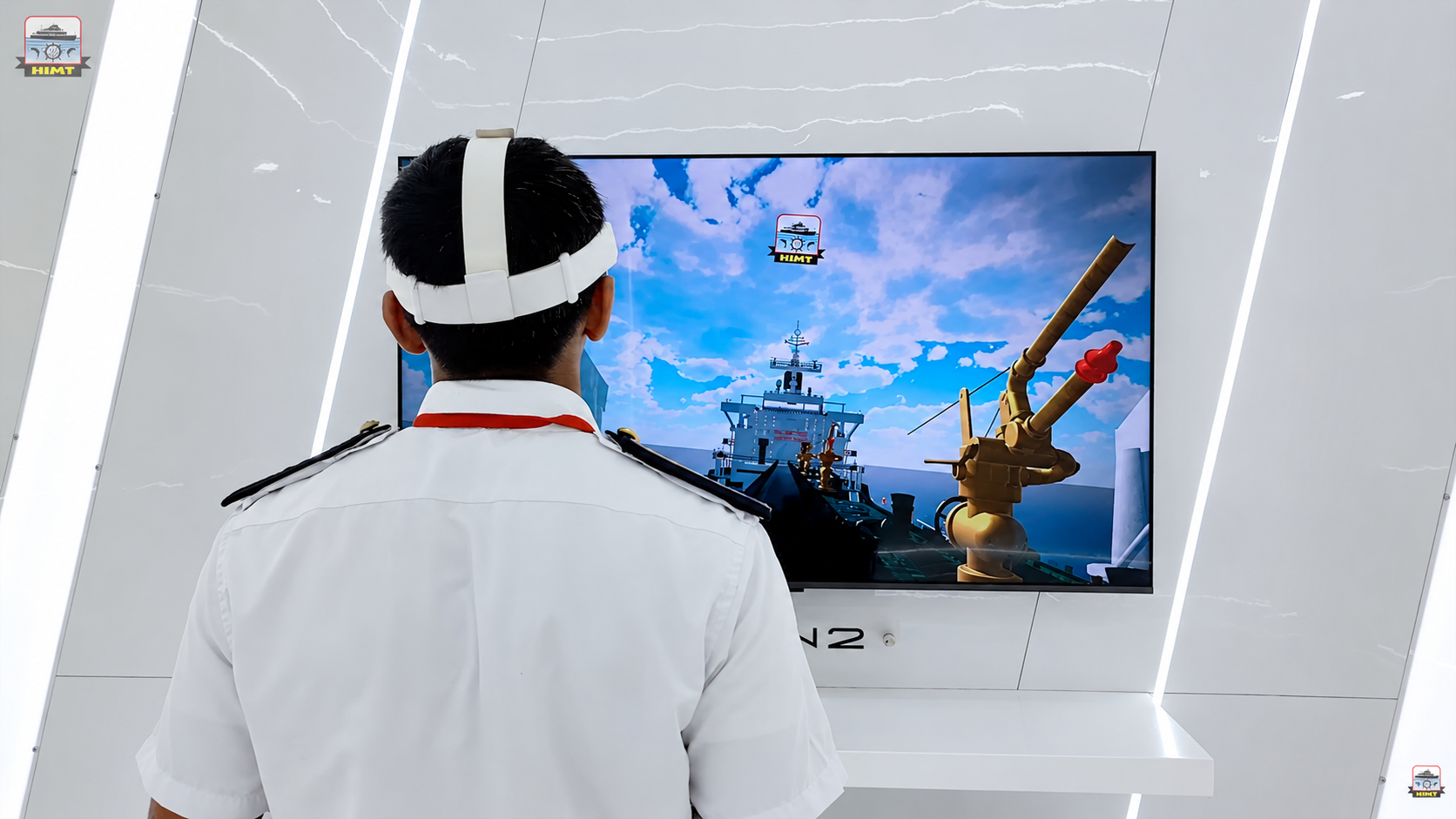
Understanding Virtual Reality in Maritime Training
Virtual Reality is a computer-generated simulation that creates a realistic three-dimensional environment. By wearing VR headsets and interacting with digital scenarios, users can experience situations that closely resemble real-world operations.
In the maritime sector, VR enables trainees to explore ship layouts, operate equipment, practice emergency procedures, and understand vessel operations in a safe and controlled environment. Instead of learning solely through textbooks, videos, or lectures, students can actively participate in realistic simulations that enhance understanding and retention.
This shift toward immersive learning is particularly important in maritime education, where practical exposure plays a crucial role in developing competent seafarers.
Why Virtual Reality is Gaining Importance in the Merchant Navy
The shipping industry faces several training challenges. Not every student gets immediate access to ships, certain operations involve safety risks, and some emergency situations cannot be replicated during conventional training. Virtual Reality helps address these challenges effectively.
VR-based maritime training provides a realistic learning experience while eliminating the risks associated with actual shipboard operations. Students can practice repeatedly until they gain confidence and competence. The technology also helps standardize training, ensuring that learners receive consistent exposure to procedures and operational environments.
Furthermore, as shipping companies continue to adopt digital technologies, future seafarers must become comfortable working with advanced systems. VR familiarizes students with modern ship environments before they begin their sea careers.
Applications of Virtual Reality in Merchant Navy Training
The role of Virtual Reality in maritime education extends across multiple departments and operational areas. Its versatility makes it valuable for deck officers, marine engineers, ratings, and maritime cadets.
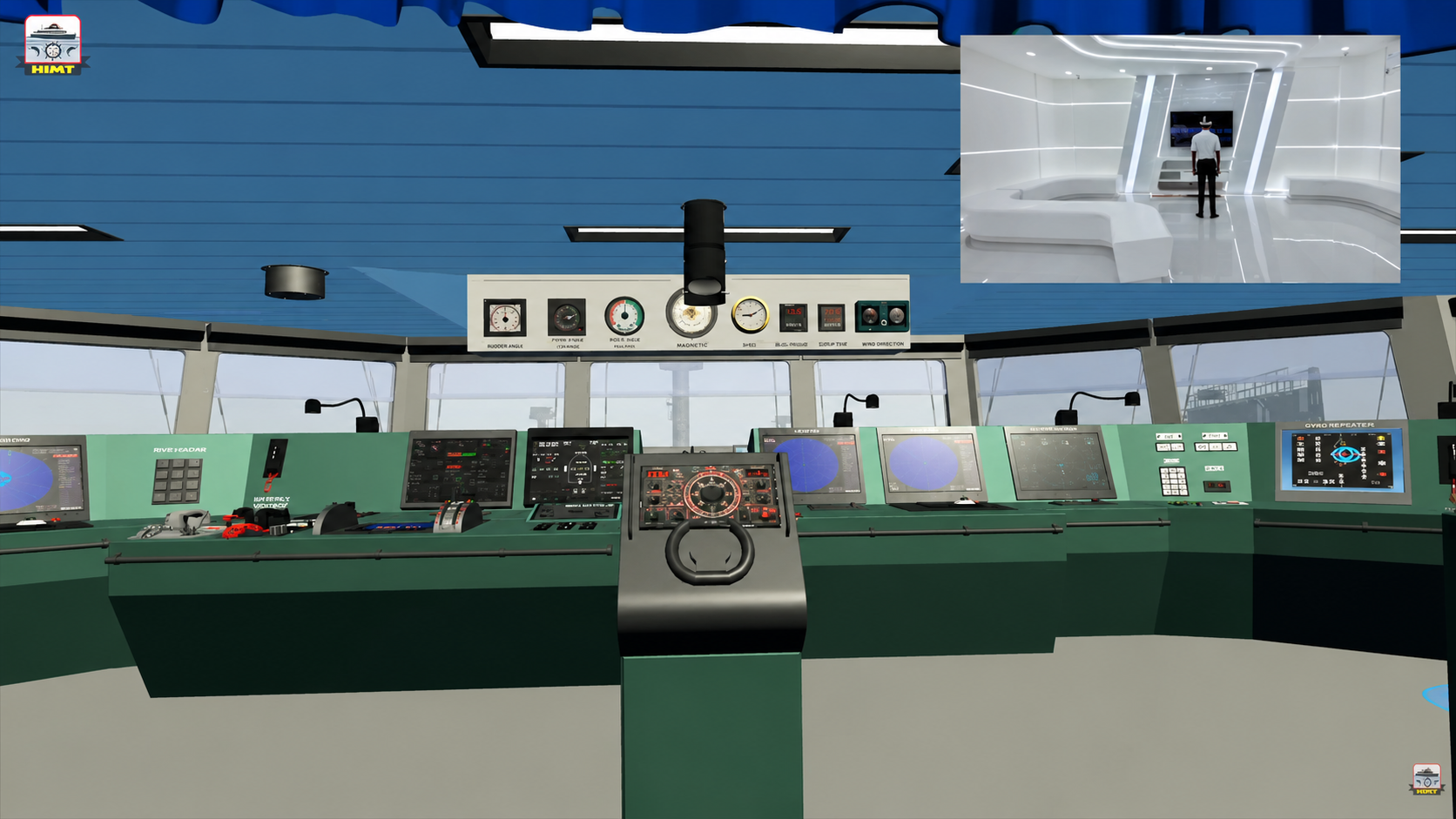
Bridge Operations and Navigation Familiarization
For deck cadets and future navigation officers, understanding bridge equipment and procedures is essential. Virtual Reality allows trainees to explore a ship’s bridge in a fully immersive environment. Students can learn the location and functions of navigation equipment, understand watch-keeping procedures, and become familiar with operational workflows.
This exposure helps reduce the learning curve when cadets join ships for their on board training.
Engine Room and Machinery Familiarization
Marine engineering students often study complex machinery systems through diagrams and classroom sessions. VR enhances this learning by allowing trainees to virtually walk through engine rooms, identify machinery components, understand system layouts, and observe operational processes.
By visualizing equipment in a realistic environment, students gain a better understanding of how different systems interact on board a vessel.
Emergency Response Training
One of the most valuable applications of Virtual Reality is emergency preparedness. Maritime emergencies such as fires, flooding, equipment failures, and evacuation procedures require quick decision-making and proper execution.
VR simulations allow trainees to practice responding to critical situations without exposing them to actual danger. Repeated training helps improve reaction time, situational awareness, and confidence during emergencies.
Safety and Hazard Awareness
Safety remains a top priority in the Merchant Navy. Virtual Reality can recreate hazardous situations that may be difficult or dangerous to demonstrate physically. Trainees learn to identify risks, follow safety procedures, use personal protective equipment, and understand workplace hazards.
Such practical exposure contributes significantly to building a strong safety culture among future seafarers.
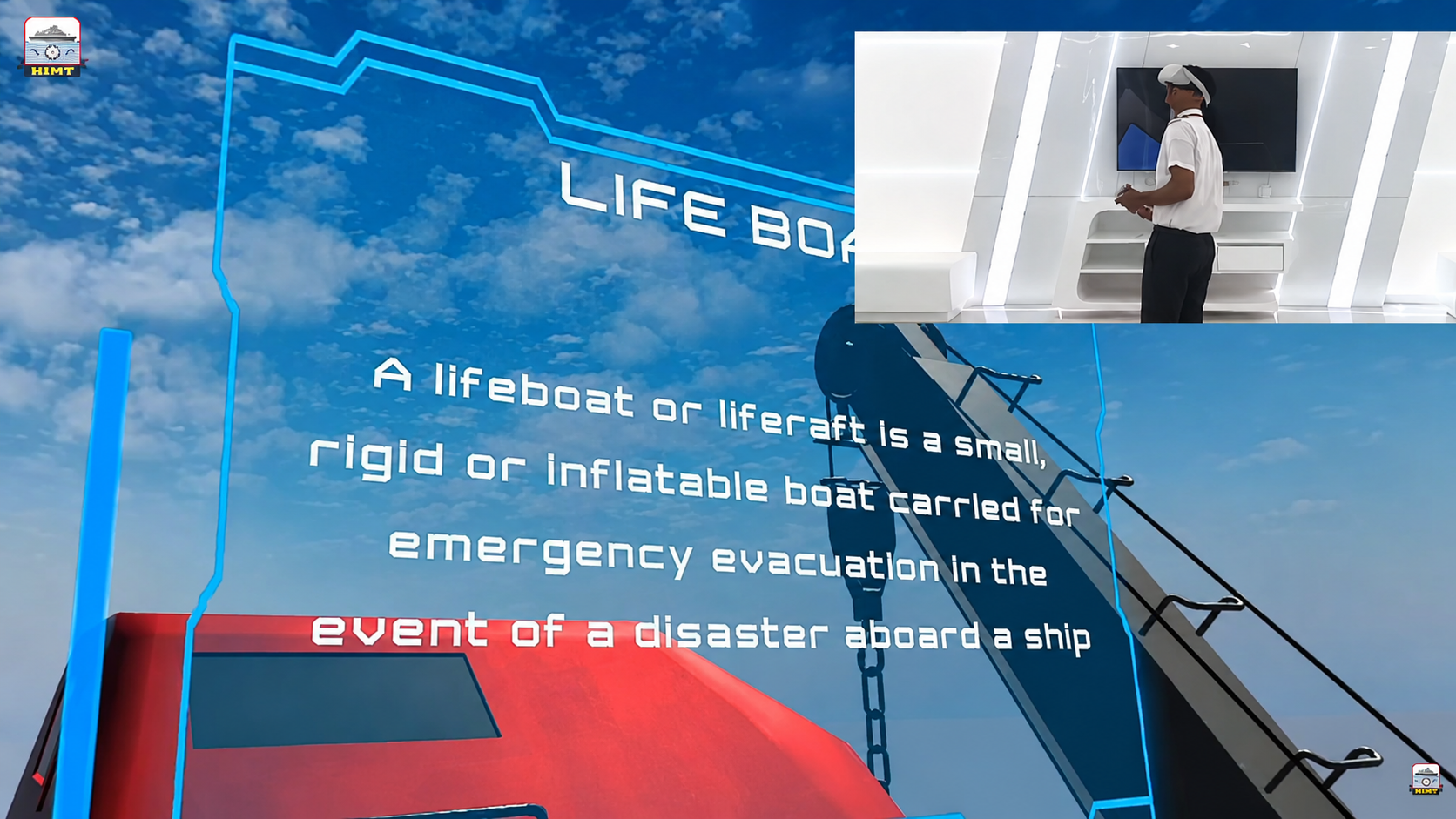
Cargo Handling and Vessel Operations
Different vessel types require specialized operational knowledge. VR enables students to explore various ship categories and understand cargo handling procedures, loading operations, ballast management, and vessel-specific safety practices.
This is especially useful for students who may not have immediate access to diverse vessel types during their training.
Benefits of Virtual Reality for Maritime Students
The growing adoption of Virtual Reality in maritime education is driven by its numerous advantages.
Firstly, it enhances engagement. Students actively participate in training rather than passively consuming information. This interactive learning experience improves concentration and knowledge retention.
Secondly, VR promotes experiential learning. Learners can practice tasks repeatedly until they become proficient. Mistakes can be corrected without operational consequences, creating a safe learning environment.
Another major benefit is accessibility. Students can gain exposure to shipboard environments that may otherwise be unavailable due to logistical, financial, or operational constraints.
Virtual Reality also helps develop confidence. When trainees eventually step on board a vessel, they are already familiar with many systems, layouts, and procedures, making the transition smoother and more effective.
The Future of Virtual Reality in the Maritime Industry
The future of Virtual Reality in the Merchant Navy looks promising. As VR technology becomes more advanced and affordable, its integration into maritime training programs is expected to increase significantly.
Industry experts foresee a future where Virtual Reality is combined with Artificial Intelligence, Digital Twins, and Augmented Reality to create highly sophisticated training ecosystems. These technologies could simulate entire ship operations, allowing trainees to experience realistic scenarios involving navigation, engineering, cargo operations, and emergency management.
Shipping companies are also recognizing the value of VR-based training in reducing operational risks and improving crew preparedness. As a result, demand for seafarers who are comfortable with digital learning tools and modern maritime technologies is likely to grow.
How HIMT College is Embracing Virtual Reality in Maritime Education
Recognizing the future potential of immersive learning technologies, HIMT College has taken a progressive step by establishing a dedicated and modern Virtual Reality Lab for maritime students.
The facility has been designed to complement traditional classroom instruction and simulator-based training by providing students with realistic virtual experiences of shipboard environments. Through Virtual Reality-based learning modules, students can gain valuable familiarization with various vessel types, operational areas, and safety procedures before joining ships.
Some of the key Virtual Reality learning experiences available at HIMT College include:
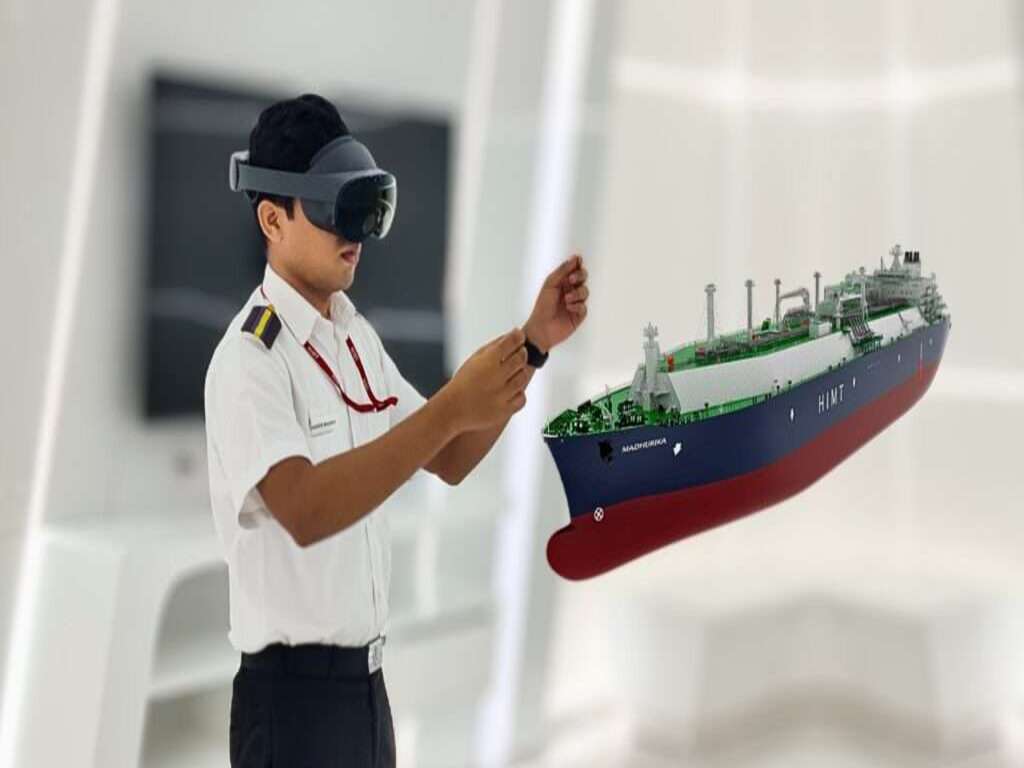
- LNG Ship Familiarization
- Bridge Familiarization
- Engine Control Room Familiarization
- RO-RO Ship Familiarization
- Bulk Carrier Familiarization
These immersive learning opportunities help students visualize real-world maritime environments, understand vessel operations more effectively, and develop practical awareness from the early stages of their training.
At a time when Virtual Reality is still an emerging and rapidly growing trend in maritime education, only a limited number of maritime institutions have incorporated dedicated VR facilities into their training infrastructure. Although VR-based training is not currently a mandatory requirement in maritime education, progressive institutions such as HIMT College have already taken the initiative to integrate this advanced technology into their training ecosystem to prepare students for the future of the shipping industry. By introducing a specialized Virtual Reality Lab, HIMT College demonstrates a forward-looking approach toward equipping cadets with practical, technology-driven learning experiences aligned with the evolving demands of global maritime operations.
Beyond VR: The Emerging Role of Augmented Reality in Maritime Training
While Virtual Reality creates a fully immersive digital environment, Augmented Reality (AR) enhances the real world by overlaying digital information onto physical surroundings. In the maritime industry, AR is increasingly being explored as a complementary training and operational tool that can improve learning efficiency, decision-making, and situational awareness.
For maritime students and seafarers, AR can provide interactive visual guidance during equipment familiarization, maintenance procedures, safety drills, and technical training. By displaying real-time information, system diagrams, operational instructions, and equipment details directly within the user’s field of view, AR helps learners understand complex shipboard systems more effectively. This approach can significantly reduce the gap between theoretical learning and practical application, especially when dealing with sophisticated onboard machinery and operational procedures.
Conclusion
Virtual Reality is redefining how maritime professionals are trained. By creating realistic, safe, and engaging learning environments, VR helps bridge the gap between theoretical knowledge and practical shipboard experience. From bridge familiarization and engine room training to emergency response and safety awareness, Virtual Reality is becoming an important component of modern maritime education.
As the shipping industry continues its digital transformation, immersive technologies such as VR are expected to play an increasingly significant role in developing competent, confident, and safety-conscious seafarers. Institutions that adopt these innovations early are helping shape the future of maritime training, ensuring that students are better prepared for the challenges and opportunities of a rapidly evolving industry.
FAQs
1. What is Virtual Reality (VR) in Merchant Navy training?
Virtual Reality in Merchant Navy training is an immersive learning technology that simulates real shipboard environments and operations. Using VR headsets, maritime students can experience bridge operations, engine room layouts, safety procedures, cargo handling, and emergency situations in a realistic virtual environment before joining a vessel.
2. How does Virtual Reality improve maritime education?
Virtual Reality enhances maritime education by providing hands-on learning experiences in a safe and controlled setting. It helps students better understand ship systems, improve practical knowledge, increase safety awareness, and develop confidence through repeated practice without the risks associated with real-world operations.
3. Can Virtual Reality replace on board training in the Merchant Navy?
No, Virtual Reality cannot completely replace on board training. However, it serves as a valuable supplement by familiarizing students with shipboard environments, equipment, and procedures before they go to sea. This helps learners adapt faster and perform more effectively during their actual on board training.
4. What types of shipboard training can be conducted using VR?
Virtual Reality can be used for various maritime training modules, including bridge familiarization, engine room familiarization, LNG ship familiarization, RO-RO ship familiarization, bulk carrier operations, working aloft safety training, emergency response procedures, and hazard identification exercises.
5. Why is Virtual Reality considered the future of Merchant Navy training?
As ships become more technologically advanced, the maritime industry is adopting digital learning solutions to improve training effectiveness and safety. Virtual Reality offers realistic simulations, cost-effective training opportunities, and enhanced learning outcomes, making it an important part of the future of maritime education and seafarer development.
6. Which maritime colleges in India offer Virtual Reality training facilities?
While Virtual Reality is still an emerging technology in maritime education and VR-based training is not yet a mandatory requirement, only a limited number of maritime institutions like HIMT College have integrated dedicated VR training facilities. These labs provide students with practical exposure to shipboard operations and safety procedures through immersive learning experiences.