
A Complete Career Guide for Students after 12th Looking to Join the Merchant Navy
Choosing a career after 12th is not just about selecting a degree — it is about selecting a future. Many students today search online for terms like “best career after 12th PCM,” “high salary courses after 12th science,” “how to join merchant navy in India,” and “marine engineering eligibility.”
These searches reflect one common dream — financial independence at an early age, a respected profession, and a career that offers global exposure.
Maritime learning, through professional programs like B.Tech Marine Engineering and B.Sc Nautical Science, offers exactly that. But success in the Merchant Navy is not based on marks alone. It depends on a combination of technical expertise, discipline, adaptability, and personal strength.
If you are a freshly school-passed student exploring maritime courses, this guide will help you understand the top skills required for a successful and rewarding career at sea.
Understanding Maritime Learning and Career Scope
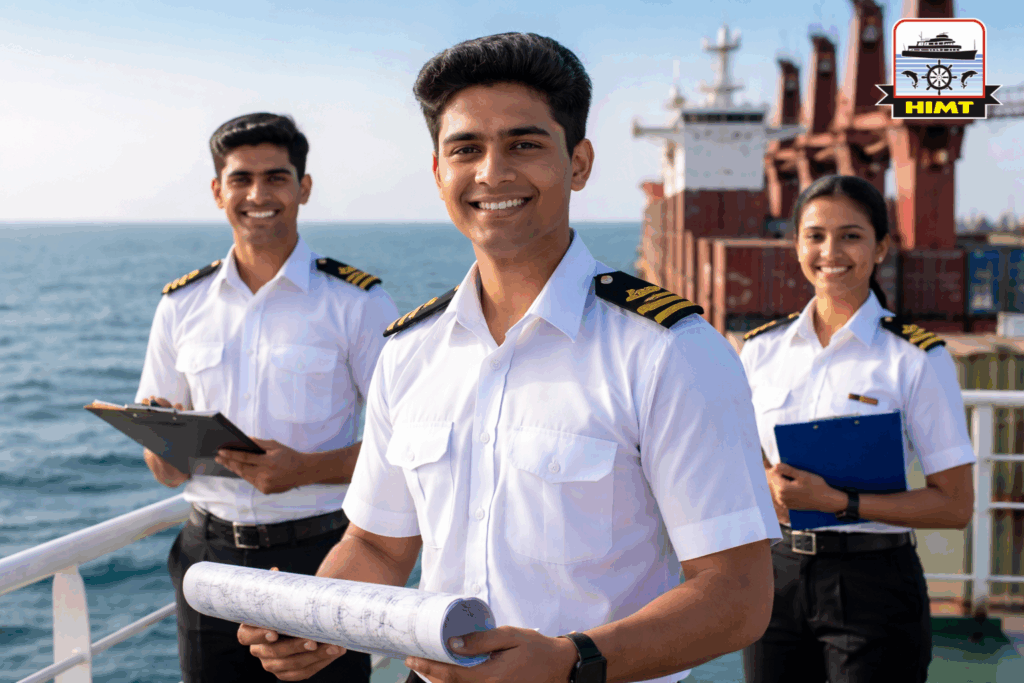
Maritime learning refers to structured professional education designed to prepare students for life onboard commercial ships. Courses such as B.Tech Marine Engineering (4 years), B.Sc Nautical Science (3 years), and Marine Engineering Lateral Entry programs combine theoretical knowledge with practical training, simulator sessions, workshops, and onboard ship experience.
Unlike many traditional degrees, maritime education is directly connected to employment in the Merchant Navy. After completion, students begin their career as engine cadets or deck cadets and gradually rise through competency exams and sea-time experience to become Chief Engineers or Captains.
This is why maritime careers are often considered among the best professional courses after 12th PCM for students who want both adventure and financial growth.
1. Strong Technical Foundation
For students choosing Marine Engineering, technical knowledge is the backbone of the profession. Ships operate on complex machinery systems including propulsion engines, electrical systems, boilers, compressors, pumps, and automated control systems.
Understanding subjects like thermodynamics, applied mechanics, marine diesel engines, and electrical technology is essential. However, maritime learning goes beyond textbooks. At sea, theory must be applied under real-world conditions. Machinery breakdowns cannot wait for external help. The marine engineer must diagnose and repair systems with precision and confidence.
A strong technical foundation builds credibility and ensures safe and efficient ship operations.
2. Practical Problem-Solving Ability
Life at sea is dynamic. Weather changes rapidly, machinery can fail unexpectedly, and emergencies demand quick thinking. This is why problem-solving is one of the most critical skills in maritime careers.
Whether you are in the engine room troubleshooting a technical fault or on the bridge managing navigation challenges, your ability to assess situations logically and respond calmly determines your effectiveness.
Maritime education develops this ability through simulator training, onboard internships, and real-life case studies. Students who cultivate analytical thinking early in their course perform better in both exams and shipboard responsibilities.
3. Discipline and Professional Responsibility
The Merchant Navy operates under strict international regulations such as SOLAS and MARPOL. Every task onboard follows structured procedures and safety guidelines. There is no room for carelessness.
Discipline begins during maritime training. Students follow routines, attend practical sessions, maintain uniform standards, and learn watch-keeping schedules. This professional discipline becomes a lifelong habit.
Unlike many land-based careers, maritime professionals carry immense responsibility. A single error can affect the safety of the ship, crew, cargo, and marine environment. Therefore, developing a strong sense of responsibility is essential from day one.
4. Communication Skills and English Proficiency
Many students ask, “Is English important for marine engineering?” The answer is yes — absolutely.
English is the international language of shipping. Ships have multinational crews, and all operational communication, safety commands, and documentation are conducted in English.
Clear communication ensures smooth coordination between departments, especially during critical operations. Students who improve their spoken and written English before joining maritime college gain confidence during interviews, onboard training, and competency examinations.
Effective communication is not only about language; it is about clarity, confidence, and professionalism.
5. Physical Fitness and Mental Strength
Maritime careers demand physical stamina and mental resilience. Students must pass DG Shipping-approved medical tests to qualify for admission. Good eyesight, general health, and psychological stability are essential.
Life at sea involves long voyages, shift duties, and limited contact with family. This can be challenging for some individuals. Mental strength helps professionals manage homesickness, stress, and workload efficiently.
However, these challenges also build maturity. Many maritime professionals develop strong independence and emotional resilience at an early stage in their careers.
Start your journey towards a high-paying global maritime career — apply now for 2026 admissions and step confidently into the Merchant Navy.
6. Adaptability to Global Environments
Ships travel across continents. One voyage may take you from India to Europe; another may connect Asia to South America. Exposure to different cultures, ports, and operational systems is part of maritime life.
Adaptability allows professionals to adjust to new working conditions, different crew members, and changing schedules. Students who are open-minded and willing to learn from diverse experiences grow faster in their careers.
7. Leadership and Team Coordination
Every maritime professional eventually takes on leadership responsibilities. From managing engine room teams to supervising deck operations, teamwork is essential onboard ships.
Leadership in the Merchant Navy is built gradually. Cadets observe senior officers, learn procedures, and develop confidence through experience. Over time, they progress to higher ranks such as Second Engineer or Captain.
Leadership requires fairness, decision-making ability, and calmness under pressure. Students who develop these qualities early in their training build a strong foundation for career advancement.
8. Safety Awareness and Risk Management
Safety is the highest priority in maritime operations. From fire-fighting training to lifeboat drills, students undergo rigorous safety programs during their maritime course.
Understanding emergency procedures, pollution control regulations, and safe machinery operation ensures the well-being of everyone onboard. A strong safety mindset is not optional — it is mandatory.
Students who take safety training seriously gain respect onboard ships and build long-term professional credibility.
9. Commitment to Continuous Learning
A maritime career does not stop at graduation. Promotions require sea-time experience and passing competency examinations conducted under maritime authorities.
From Junior Engineer to Chief Engineer, or from Deck Cadet to Captain, each step requires additional certifications and continuous study.
Students often search for “career growth in merchant navy” and “merchant navy salary progression.” Growth in this field is structured and performance-based. Those who remain committed to learning achieve significant financial and professional success.
10. Passion for the Sea and Long-Term Vision
Above all technical and professional skills, passion remains the most important factor. Maritime life is unique. It offers adventure, global travel, and early financial independence, but it also requires dedication.
Students who genuinely feel inspired by ships, oceans, engineering systems, and global trade usually find maritime careers deeply fulfilling. Passion fuels perseverance during tough voyages and motivates continuous improvement.
When passion meets discipline and skill, maritime learning becomes life-changing.
Why Maritime Career Offers Early Freedom
Maritime careers offer structured promotions and competitive salaries at a relatively young age.
Unlike many conventional degrees where career growth is uncertain, maritime professions provide clear pathways. With experience and competency exams, professionals can reach senior ranks within a defined timeline.
This structured growth, combined with global exposure, makes maritime education one of the most promising professional career options in India.
Start Your Maritime Journey with HIMT College
If you are planning your future and looking for a career that offers discipline, respect, financial growth, and international opportunities, maritime education could be the turning point.
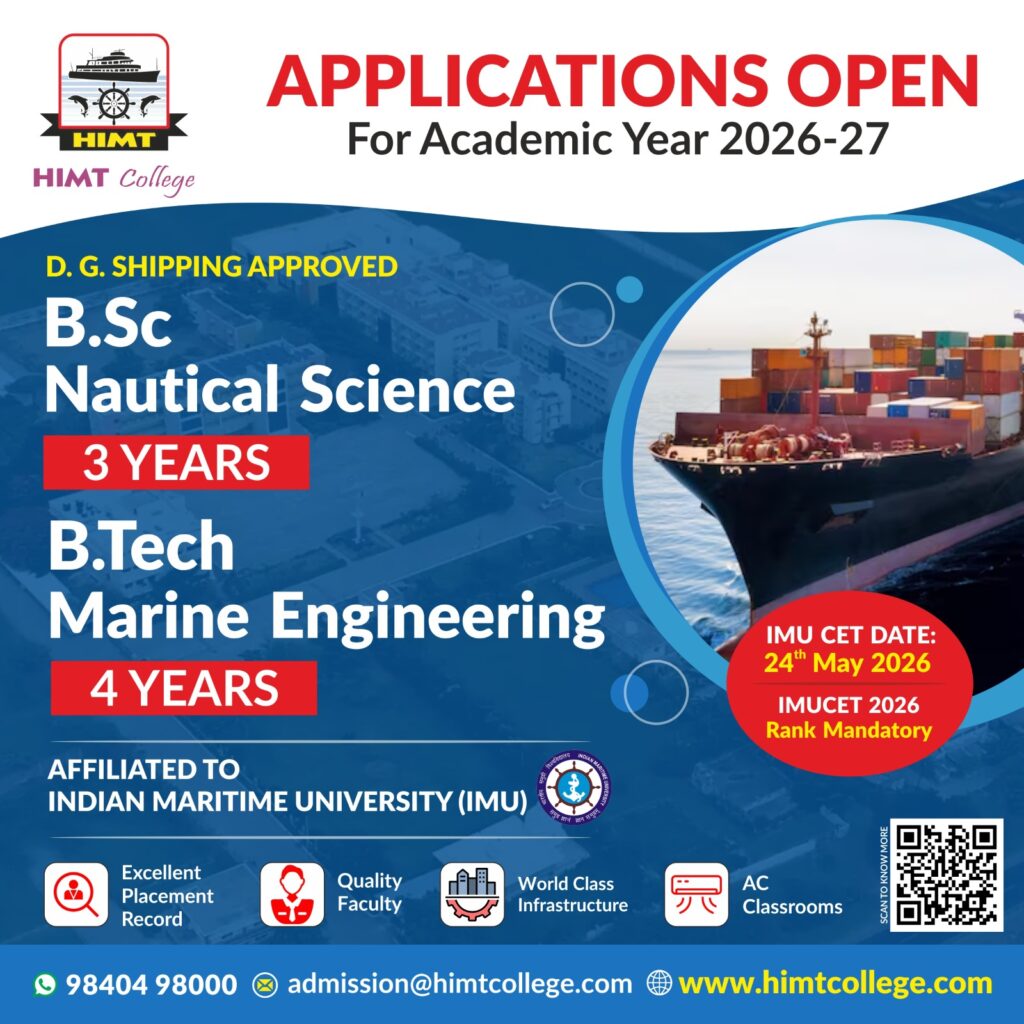
Admissions for 2026 are now open at HIMT College for:
- B.Tech Marine Engineering – 4 Years
- B.Sc Nautical Science – 3 Years
- B.Tech Marine Engineering (Lateral Entry) – 3 Years
HIMT College provides industry-oriented training, modern infrastructure, and dedicated placement support to help students build successful careers in the Merchant Navy.
The sea does not just offer a job — it offers transformation.
🌊 Apply now for the 2026 intake and take your first step toward a powerful maritime career.